Solitude in a Connected World: Reclaiming the Moments of Isolation We Are Bound to Forget
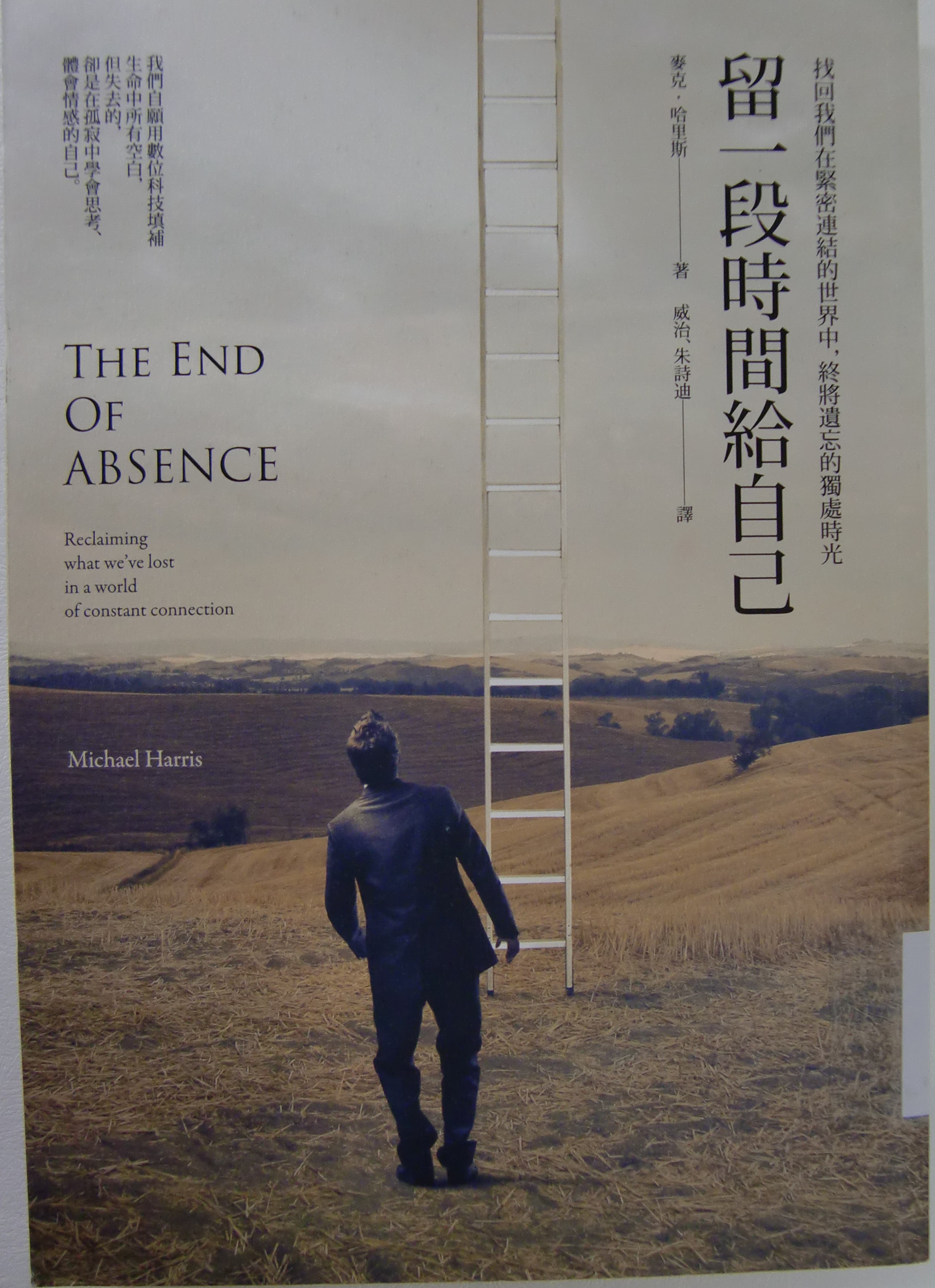
Book Title: Solitude in a Connected World: Reclaiming the Moments of Isolation We Are Bound to Forget
Book Description:
Do you still remember the days before the internet?
When we voluntarily hand over even the blank spaces of our lives that once belonged to us to internet technology, have you ever carefully wondered: what exactly did we give up in exchange for all of this? And what do we have left for ourselves?
It has been a mere few decades since we transitioned from a world without the internet to an era where we can go online at any moment. Now, a quick Google search yields all kinds of information we desire; a single tap on Facebook or LINE allows us to see what our friends and family are up to at any time. Yet, at the very same time, the things and experiences that truly matter to us—the genuine connections between people, or between people and the world around them—have quietly slipped away from our lives, never to be recovered.
Perhaps we still vaguely remember life before the internet emerged. We used to write moving letters to express our longing, learn to deeply investigate and think through the root causes of things we didn't understand in class, or even just embrace solitude to do absolutely nothing, letting our minds soar through wild imaginations.
But now, do you ever do that anymore?
Author Michael Harris uses the late 1980s as a watershed. Those born before the 1980s were already adults when they first encountered the internet; having experienced the lifestyle before its inception, they belong to the "straddle generation" and can perceive the contrast. However, those born in or after the 1980s will completely lose those precious experiences. Harris poses a crucial question: What legacy should we leave for future generations? The answer is "absence"—withdrawing from internet technology and from things outside ourselves. When online life occupies the entirety of your experiences, certain connections (and experiences) begin to leak away drop by drop; once lost, their intrinsic value is difficult to restore.
We are currently living in a period akin to the Gutenberg era, when Johannes Gutenberg's printing press led theologians to believe that "faith will diminish, law will perish, and the Scriptures will fall into oblivion." Today's internet acts just like Gutenberg's press, profoundly impacting and altering our behavior, and even the way we think.
Global internet usage has expanded nearly fivefold compared to a decade ago. According to statistics from YouTube, users upload up to one hundred hours of video every single minute, meaning we consume the equivalent of a decade's worth of content every single day. Furthermore, surveys in the United States show that adults aged 18 to 64 spend an average of 3.2 hours a day on social networking sites.
In this new Gutenberg era, Harris argues that while the internet keeps us constantly "connected," it disrupts the act of "thinking" itself. Our digital devices buzz and hum without pause, interrupting opportunities for "imagination" and cutting off potential new insights and discoveries. We crave uploading photos of fine food to Instagram more than actually savoring the meal; we create false alter-egos online to mask our true selves; we express our affection through a matrix of pixels displaying "I love you" on a digital screen; ultimately, we allow technology to replace everything we are.
In this captivating information age where everything is available at our fingertips, we rarely contemplate what humanity has given up to secure this reality. The author attempts to recreate these special, missing connections that have vanished from the earth. By exploring various facets of life—such as sex, memory, and distance—he reminds us that moments of "absence," where there is no internet technology and only oneself, are an indispensable part of being human. They are worth protecting and serve as the ultimate source of lasting fulfillment.
About the Authors:
Author: Michael Harris
Michael Harris is a contributing editor for Western Living and Vancouver Magazine. His journalism has garnered multiple awards. Author website: www.endofabsence.com
Translators:
Wei Zhi
Graduated from the Department of History at Tamkang University. He has worked as a bookstore manager and a publishing house marketer, and spent a year working and traveling in Australia. He currently works as an editor at a publishing house while freelancing in editing, interviewing, and translation.
Chu Shih-Ti
Graduated from the Department of Russian at National Chengchi University. She previously worked as a film subtitle translator for film festivals and currently works as a freelance translator.