Life on the Ground Floor: Letters from the Edge of Emergency Medicine (Chinese Edition: My Life in the First-Floor Emergency Room)
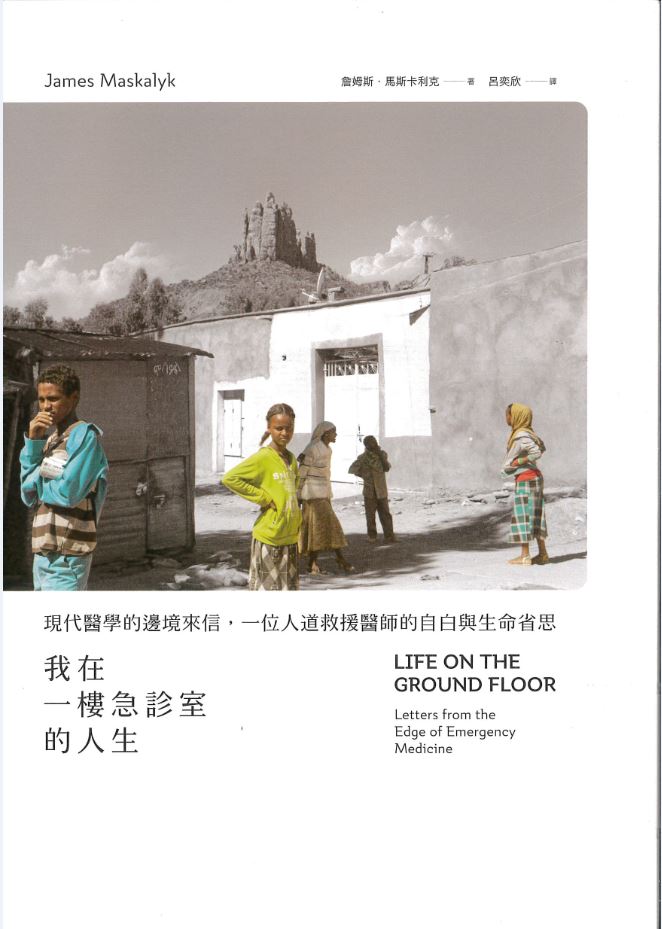
Book Title: Life on the Ground Floor: Letters from the Edge of Emergency Medicine (Chinese Edition: My Life in the First-Floor Emergency Room)
Synopsis:
This book won the 2017 Hilary Weston Writers’ Trust Prize for Nonfiction.
Twenty-four stories spanning over a decade, interwoven between emergency rooms in Ethiopia and Canada. A humanitarian physician deeply pays tribute to the joys and sorrows, poverty and illness, despair and hope of the emergency room through his medical journals.
Highly recommended by:
• In medically advanced nations, an emergency physician is a part within a highly interconnected system, where comprehensive healthcare resources support every "part" to operate without hindrance. In contrast, Ethiopia’s first emergency room started with only four physicians responsible for the emergency care of tens of millions of impoverished and sick citizens.
• Many North Americans casually flush excess pharmaceuticals down the drain, allowing them to flow day and night into the natural water cycle and harm aquatic life. Meanwhile, hospitals in Ethiopia, suffering from severe shortages of medicine, watch a few more patients slip away past medical help every day.
• In African refugee camps, the clean water ration per person is a mere ten liters per day, sometimes filtered from muddy puddles using only coarse cloth, causing bacteria to be ingested. Conversely, in Canada, the per capita water consumption is three hundred liters daily, used not only for drinking and medical care but also for irrigating hops, extracting oil, and flushing toilets.
• Doctors in Canada readily perform endoscopies as a temporary means to appease patients without considering the cost. When the author arrived at a resource-deprived Ethiopian emergency room, he found that even the wires of an electrocardiogram machine could be stolen and sold in the market.
■ Out of Nothing—Shouldering the Burden of the Poor and Sick in an Environment Where Emergency Medicine is Neglected and Challenged
In 2007, Dr. James Maskalyk, a Canadian native, received a phone call from a friend and subsequently took on the weight of tens of millions of lives thousands of miles away. From then on, this emergency medicine expert traveled back and forth between North America and Addis Ababa, the capital of Ethiopia, to establish the nation’s first emergency room inside Black Lion Hospital, the capital’s largest public teaching hospital.
■ More Than Saving Lives: Sowing the Seeds of a Frontline Lifesaving System—The Emergency Room Framework—With Limited Resources
In the makeshift Ethiopian emergency room during its rudimentary stages, the author had to race against tight schedules daily, using limited medical supplies and pharmaceuticals to rescue patients who suffered from congenital malnutrition and were burdened by wounds and chronic illnesses. Furthermore, in a society lacking funds and technology, he strove to train the first cohort of talents dedicated to emergency medicine. Apart from sustaining a fragile, hard-earned emergency system, the author repeatedly asked himself: at the crossroads of life and death, how does one strike a balance and look after both "medical interventions" and the overarching humanitarian principle of "fraternal care"?
■ Letters from the Margins of Emergency Medicine: Reflections on Modern Medicine Traversing National Borders and Cultural Barriers
Although every hospital has different cultures, resources, and medical challenges, all emergency rooms share common ground because they are located on the first floor. In this book, the author draws inspiration from the emergency "ABC assessment of patient physical conditions" to select the most representative emergency room vocabulary for each letter of the English alphabet. He gazes from small, fundamental human life supports—airway, blood, nutrients—to large, frustratingly helpless medical systems, pharmaceuticals, and emergency frameworks of modern medicine. He transforms the trauma, poverty, mourning, laughter, tragedy, and hope witnessed in the ER into this heartfelt journal of contemplation. In these twenty-plus medical essays, we observe his reflections as he shifts between the identities of an "emergency physician" and an "ordinary human" who must also experience life, aging, illness, and death, alongside the brutal contrasts he witnessed while practicing medicine between Canada and Ethiopia.
The high walls of life and death, the dilemmas of the emergency system, the challenges of the grand environment, and the joys and hardships of the medical frontline—in this book, they guide us to explore the true meaning of emergency medicine and the resilience of the human spirit. In the eyes of a physician who frequently gazes closely at death, what does life look like? What revelations can an emergency room fixed on the first floor bring?
▍Critical Acclaim
In 2009, fresh out of military service, I underwent Postgraduate Year (PGY) training at Taichung Veterans General Hospital and spent a month in the ER. It became the place I remember most vividly from that entire year. Opening the doors of the emergency room every day, you find not just one story, but hundreds of stories. Illnesses range from mild to severe, and lives hang in urgency or ease. As a young physician busy with work, it was hard to find opportunities to explore every story. However, those faces of melancholy, tension, weeping, and bitter smiles always made me look twice, imagining the joys, sorrows, meetings, and partings behind them. Back then, I often thought, how wonderful would it be if someone recorded these stories? Now the wait is finally over. Life on the Ground Floor is the long-anticipated book of my dreams, and I share it with you.
── Wei-Min Chu, Family Medicine Physician and Director of the Palliative Care Ward at Taichung Veterans General Hospital, Chiayi Branch
The author possesses a highly active mind and drive. Not only does he seem to move dynamically between different locations, but even by the bedside, past memories constantly flash before his eyes. Following the author's stream of consciousness, one can sense that practicing medicine is not a rigid job, but a practice full of challenges and humanity.
── Zheng-Kun Lin, Physician, Popular Science Writer, and Winner of the China Times Open Book Award and Wu Ta-You Popular Science Gold Sign Award
"A beautiful, smart, soul-searching memoir of a frontline doctor. Elegant, heartbreaking, and deeply wise."
── Gavin Francis, Author of Adventures in Human Being: A Grand Tour from the Cranium to the Calcaneum
"One of Canada's most brilliant young non-fiction writers has written a book about humanity that is beautiful, tender, and moving. Reflecting the complexities of the human spirit, it is a powerful narrative that grips the reader, lingering long after, and is balanced by flashes of humor. In the tradition of Ryszard Kapuscinski, Katherine Boo, and Wilfred Thesiger, Maskalyk possesses a rare understanding of people and place, taking us on an extraordinary journey."
── Samantha Nutt, Founder of the international humanitarian organization War Child and Author of Damned Nations: Greed, Guns, Armies & Aid
"With deep insight, honesty, and humanity, Maskalyk explores the paradoxes, contradictions, and uncertainties of modern medical practice. An outstanding new work by one of Canada's finest writers."
── James Orbinski, Former International President of Doctors Without Borders and Author of An Imperfect Offering: Humanitarian Action in the Twenty-First Century
About the Author
James Maskalyk
An emergency physician and author of the bestseller Six Months in Sudan. He has participated in Doctors Without Borders operations, with footprints spanning from Toronto and Addis Ababa to Cambodia and Bolivia. Beyond practicing medicine, he engages in teaching and has been recognized with teaching awards. He also practices meditation and teaches it at the Consciousness Explorers Club.
About the Translator
Yi-Hsin Lu
Graduated from the Translation and Interpretation Graduate Institute of National Taiwan Normal University (Translation Track). She has worked in publishing companies and the financial industry and currently specializes in freelance translation. Her translated works include Off the Map, Typographic Design Systems, And Then You're Dead, How Flowers Changed the World, The Drug Hunters, and Skyfaring: A Journey with a Pilot.
-
Tsun-Jing Fang (Chairman of the Taiwan Society of Emergency Medicine)
-
Wei-Min Chu (Family Medicine Physician and Director of the Palliative Care Ward at Taichung Veterans General Hospital, Chiayi Branch)
-
Zheng-Kun Lin (Physician, Popular Science Writer, and Winner of the China Times Open Book Award and Wu Ta-You Popular Science Gold Sign Award)
-
Shang-Ho Su (Surgeon and Golden Tripod Award Winner)
-
The popular medical illustration fan page "The Emergency Female Doctor Actually."