The Evolution of Surgery: Operations, Western Medical Education, and the Development of Healthcare Systems
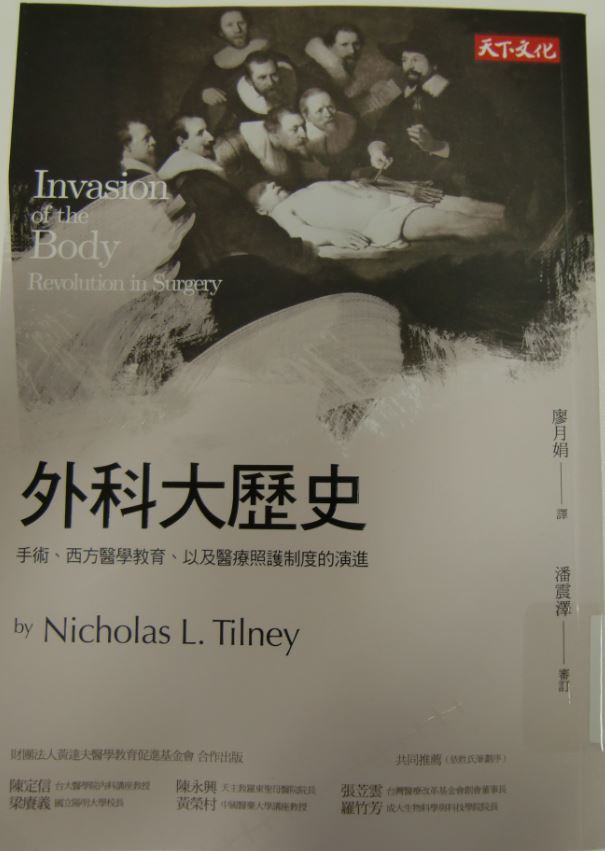
Book Title: The Evolution of Surgery: Operations, Western Medical Education, and the Development of Healthcare Systems
Book Description:
It takes fifteen years for a surgeon to reach maturity:
Five years to learn how to operate, five years to learn when it is best to operate,
and another five years of refinement to know when not to operate.
The Evolution of Surgery tells the story of the development of modern surgery, describing various medical innovations, including the advent of anesthesia, the prevention of infection, the development and application of antibiotics, insulin, and modern drugs, as well as reforms in modern medical education and surgical techniques. Consequently, the capabilities of surgeons have been elevated to a level unimaginable to their predecessors.
"Every successful surgeon shares a common trait, which is standing beside the patient in the operating room with full confidence. The patient trusts you completely to save them and has already been anesthetized. With a steady hand, you make an incision in the sterile skin, then open the patient's body cavity to perform the surgery. Sometimes, if you do not operate, the patient has no hope of survival. You must constantly remind yourself that you are invading a patient's body with a knife, and that the patient, just like you, is a person of flesh, blood, emotion, and soul, by no means a specimen or just a case study."
—— Chapter 10, "The Making of a Surgeon: Past and Present"
Critical Acclaim:
"Dr. Tilney possesses a unique insight, capable of uncovering fascinating details and seeing connections that ordinary people cannot anticipate. He is a master storyteller. Under the author's masterful pen, the century-long evolution of surgery makes this book impossible to put down."
—— Atul Gawande, Author of Complications: A Surgeon's Notes on an Imperfect Science and Being Mortal: Medicine and What Matters in the End
"The Evolution of Surgery details the development of surgery from ancient times to the present. The various surgical scenes described in the book are vividly brought to life, leaving readers captivated (though some might find it spine-chilling). Anyone with even a passing interest in their own physical body will find it absolutely unputdownable."
—— Pan Chen-Tse, Former Professor and Director of the Graduate Institute of Physiology at National Yang-Ming University
"From unhygienic barbers to surgical robots, the author searches far and wide to trace the evolving trajectory of surgery and describe the cultivation of the surgical profession, including the pioneers who set various milestones, the latest medical technologies, and the future of this specialty... Both general readers and medical professionals alike will be deeply captivated."
—— Dick Maxwell, Library Journal
"Dr. Tilney recounts in meticulous detail the evolution of medicine, open-heart surgery, organ transplantation, and the development of the heart-lung machine. The book contains numerous real-life surgical cases, including the author's own operating experiences... He also offers a sharp critique of today's escalating medical costs and inequalities in healthcare access. Anyone concerned with healthcare reform should take his recommendations seriously."
—— William Bynum, The Wall Street Journal
"In this book, Nicholas Tilney, a renowned American surgeon, recounts memorable experiences from his surgical career, interwoven with the history of surgery—from ancient, torture-like procedures to today's delicate, painless, minimally invasive surgeries. He writes compellingly about anesthesia, drug development, aseptic techniques, healthcare reform, wartime and peacetime surgery, and facial transplantation."
—— Nature Journal
About the Authors:
Author: Nicholas L. Tilney
Surgeon Emeritus at Brigham and Women's Hospital in Boston and Francis D. Moore Professor of Surgery at Harvard Medical School.
After receiving his medical degree from Cornell University Medical College, Tilney came to Brigham Hospital to train under the Chief of Surgery, Francis D. Moore. In 1973, he became a general and vascular surgeon at Brigham Hospital. He later served as Director of the Transplant Research Center at Brigham Hospital (leading the center for twenty years and participating long-term in transplantation biology research programs with the National Institutes of Health) and Director of the Surgical Research Laboratory at Harvard Medical School.
Throughout his lifetime, Dr. Tilney published 550 scientific papers. He was awarded the Roche Pioneer Award by the American Society of Transplant Surgeons and the Roche Outstanding Achievement Award by the American Society of Transplantation, and was honored as a pioneer in kidney transplantation. He served as President of the American Society of Transplantation, President of the New England Organ Bank, and was the co-founder and Editor-in-Chief of the journal Transplantation Reviews. He authored three books on medical history: Transplant: From Myth to Reality, A Perfectly Striking Departure: Surgeons and Surgery at the Peter Bent Brigham Hospital, 1912–1980, and The Evolution of Surgery.
Dr. Tilney passed away on March 13, 2013.
Reviewer: Pan Chen-Tse
Received his Bachelor's and Master's degrees from the Department of Zoology at National Taiwan University, and a Ph.D. in Physiology from Wayne State University. He conducted research at Rockefeller University, Michigan State University, and the University of Michigan. He formerly served as Professor and Director of the Graduate Institute of Physiology at National Yang-Ming University, and as a visiting and adjunct professor at Wayne State University and Oakland University. Currently residing in Michigan, USA, he is a full-time writer and translator, and serves on the editorial and translation committee for Scientific American (Taiwan edition). His published works include Scientific Reader, Science is Everywhere in Life, and Why Doesn't the Stomach Digest Itself?. He has translated over twenty books, including Human Physiology, Pandora's Seed, and The Fate of Birds is the Fate of Humans.
Translator: Liao Yueh-Chuan
Born in 1966. She was named the 2006 Best Translator of the Year by Eslite Reader's Report, won the 2007 Golden Tripod Award for Best Translator, and received the Silver Sign Prize at the 2008 Wu Ta-You Popular Science Translation Awards. Her translated works include dozens of books such as Complications, Being Mortal, Better, Steve Jobs, Becoming Steve Jobs, The Price of Civilization, Before We Say Goodbye, Wolf Hall, Bring Up the Bodies, and My Age of Anxiety.
