
When applying AI tools in academic research, understanding their boundaries and guidelines is crucial. This section explores important topics such as academic integrity, data privacy, copyright, and how to properly cite AI collaboration, ensuring your research process meets the highest standards of academic ethics.
Learn more about AI Ethics Guidelines 👉AI Area
Library AI Resources Guide
【 📌 Quick Navigation 】
1. AI Ethics & Literacy 2. Academic Database AI Tools 3. Other General AI ToolsLibrary AI Acceleration Station Plus ─ Join Our Latest Event!
From September to November 2026, we invite all faculty and students to explore the library's upgraded AI learning tools!
Integrating AI navigation and smart reading features across major academic databases, we help you efficiently complete literature reviews and research outputs while maintaining academic integrity. Complete the online learning modules and designated surveys to participate in our exclusive promotional event.
Visit Event Website Integrating AI navigation and smart reading features across major academic databases, we help you efficiently complete literature reviews and research outputs while maintaining academic integrity. Complete the online learning modules and designated surveys to participate in our exclusive promotional event.

【 ⚖️ 1. AI Ethics & Literacy 】
【 📚 2. Library Academic Database AI Tools 】
AccessMedicine
Features the built-in AI Reader, providing instant, concise explanations for highlighted text (up to 400 words). It also automatically generates custom practice questions to help you quickly master complex medical concepts.
User Guide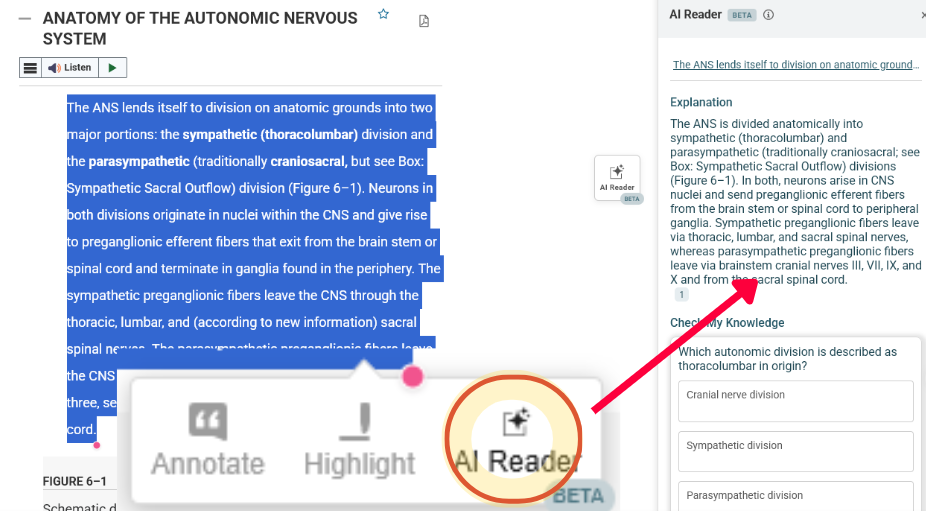
Airiti Library Journals (formerly CEPS)
Equipped with an AI Assistant and research analysis modules. It automatically filters the top 10 most relevant papers for topic summarization, helping you build a comprehensive literature review framework with a single click.
User Guide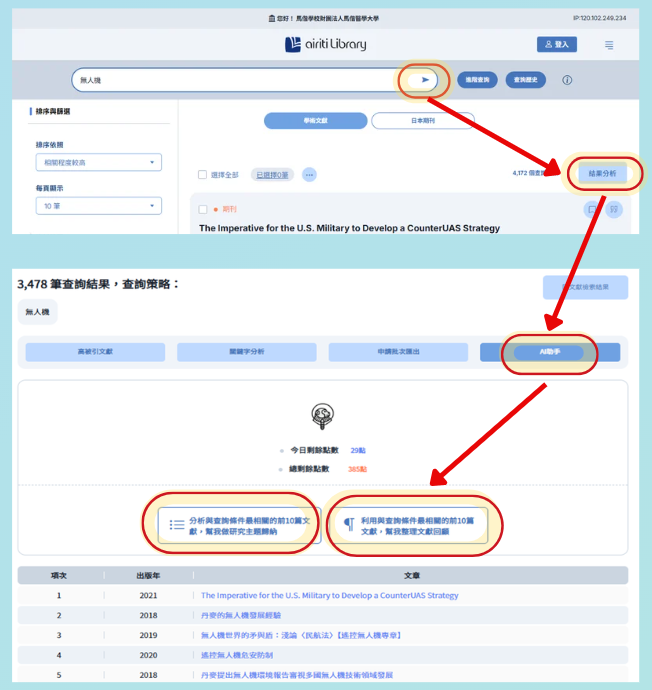
EBSCO Databases (incl. EDS, Medline, CINAHL, CMMC)
EBSCO databases combine "AI Insights" and "Ask AI" features. They not only extract concise summaries from massive cross-disciplinary literature and support nursing-specific natural language searches to reduce screening time, but also allow users to ask questions directly about a full-text article. The AI provides real-time answers, enabling you to grasp core concepts quickly without reading paragraph by paragraph.
EDS Guide 1 EDS Guide 2 CINAHL CMMC MEDLINE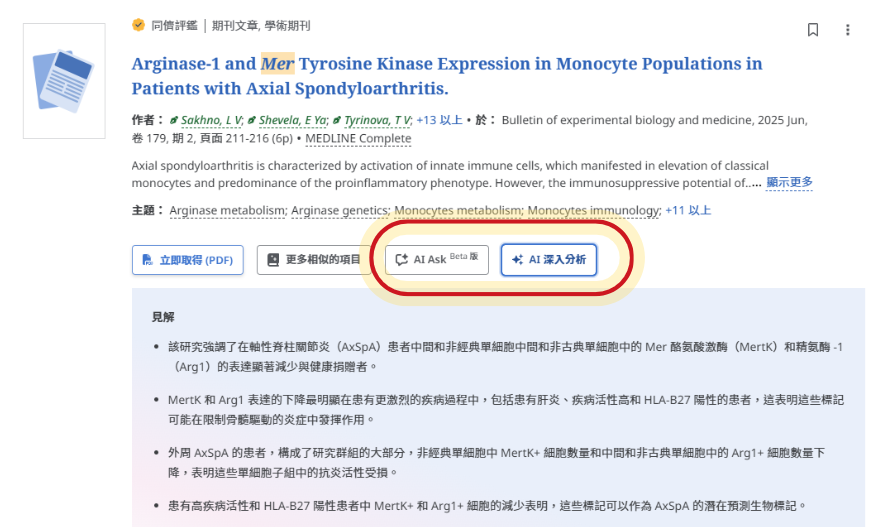
JoVE
Integrates AI Co-Pilot and Ask AI Smart Search. It allows you to ask questions about experimental procedures (e.g., basic or molecular biology) using natural language, accurately matching visual videos and generating key takeaways.
User Guide 1 User Guide 2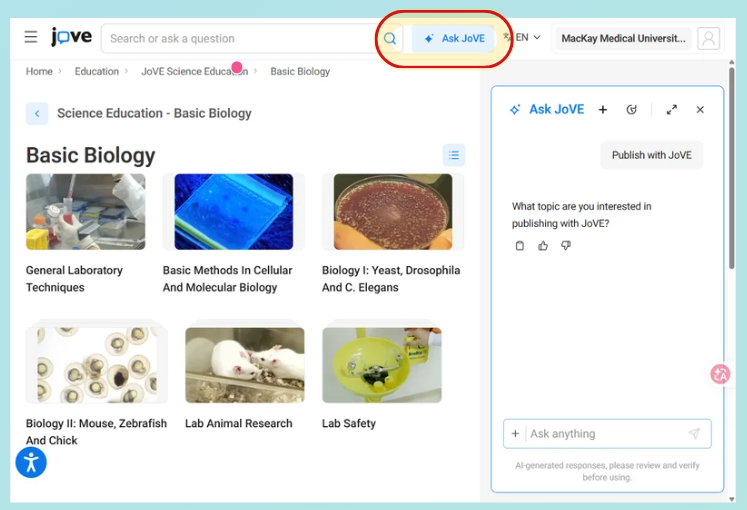
UpToDate
Designed specifically for clinical use, Expert AI supports natural language queries and follow-up questions in both English and Chinese. The system quickly provides rigorous, evidence-based (and traceable) medical decision support.
User Guide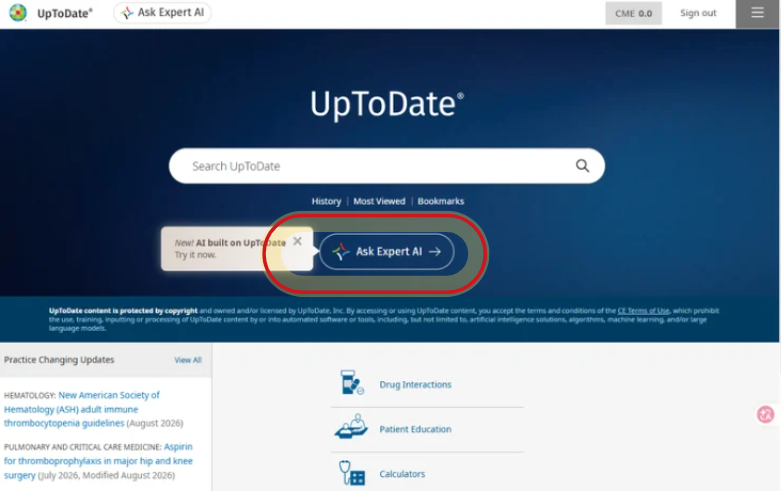
ProQuest Ebook Central
Features smart reading assistance that automatically analyzes keyword hotspots across original texts and massive search results, refining core academic conclusions for you in just one minute.
User Guide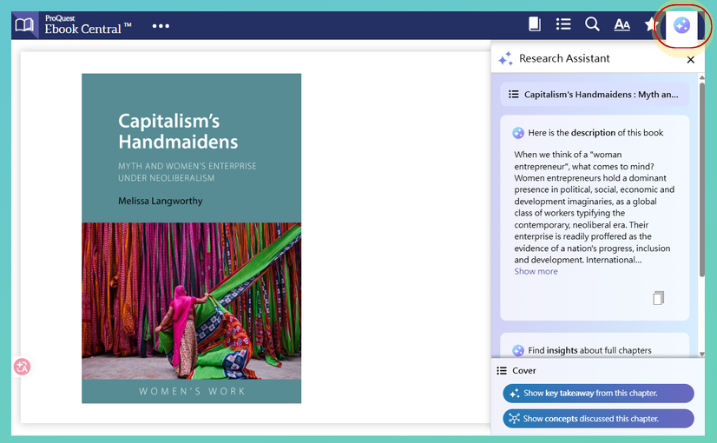
EndNote
Combines the latest AI smart writing technologies, optimizing the entire writing workflow for theses and journal publications—from efficient "one-click PDF citation analysis" to precise "big data journal matching."
User Guide 1 User Guide 2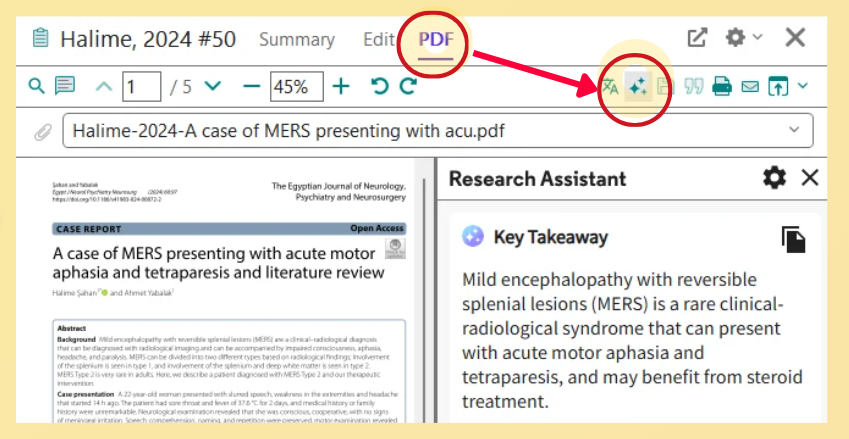
- 【Important Notice】Before using certain AI features (e.g., UpToDate Expert AI, McGraw Hill AI Reader), please ensure you have registered and logged into your personal account for that specific database within the campus network.
【 🛠️ 3. Other General AI Tools 】
In addition to academic library databases, we have compiled a variety of general AI assistant tools suitable for daily use by students and researchers. Covering text generation, audio transcription, summarization, and presentation creation, these tools will help you comprehensively enhance your learning and working efficiency.
Explore More General AI Tools 👉💡 Usage Reminder & Ethics Statement
When using AI tools for academic research or assignments, please be sure to comply with the university's academic ethics guidelines and relevant intellectual property laws. AI-generated content is intended for "reference and assistance" only and must never be submitted directly as original work. Researchers bear the responsibility of verifying the accuracy of the data and, when necessary, properly citing the collaboration and use of AI tools.
