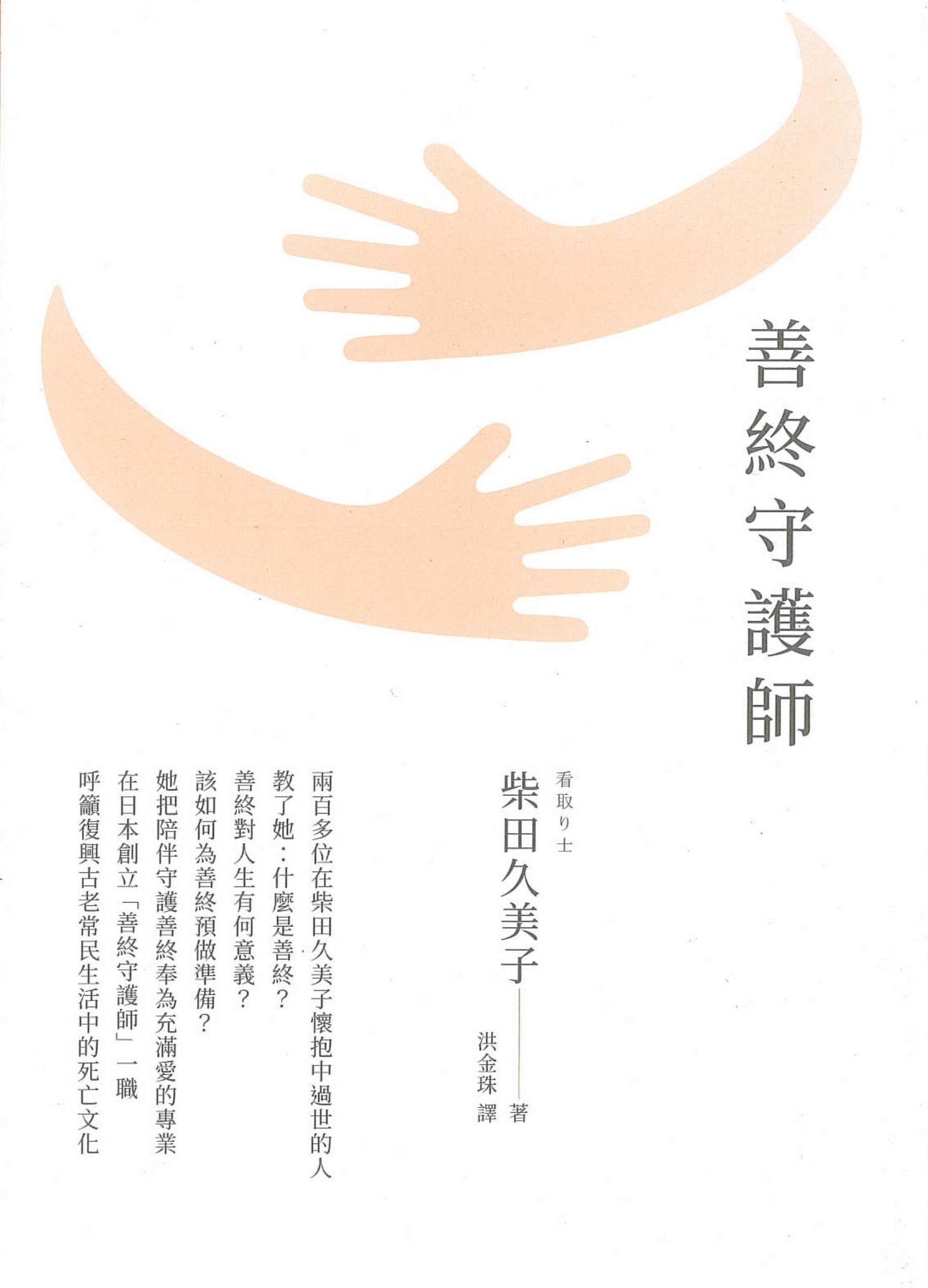
The End-of-Life Guardian (Japanese: Mitorishi)
Synopsis:
What would you do if a family member was suddenly declared to have little time left?
Or, if you were the one given that prognosis, how would you arrange things?
Many people say they hope to pass away peacefully at home in the end; however, the reality is that most people die lonely deaths in hospitals.
A happy death is not about the location; it refers to fulfilling one's "dream" of death.
When the curtain falls on a long life, a person passes the energy of life forward. That scene is not one of sadness, but a time filled with love and joy.
I cannot keep this precious experience to myself. I wish for more people to know the true reality of the end of life, and I hope everyone will begin preparing for their own happy return through this book, thereby discovering the true meaning of life and death further. — Kumiko Shibata
The End-of-Life Guardian is a book that passes on the "mindset of returning home." It is a factual record and a collection of insights and reflections by the author, Kumiko Shibata, who has witnessed countless end-of-life scenes.
Before dedicating her life to guarding the dying, she worked at McDonald's Japan, earning the company's highest honor medal, and also founded her own restaurant. However, she once mistakenly chose suicide, experienced two broken marriages, and battled cancer three times. This series of sharp turns in life eventually led her to the path of end-of-life guardianship.
Looking back at her life journey, her father's death was the starting point of her dedication to end-of-life care.
In the early spring of her sixth-grade year in elementary school, her father was given only three months to live due to stomach cancer. Faint light filtered through the paper sliding doors of the room, where many adults surrounded her bedridden father. He thanked everyone, and finally, holding the hand of his youngest daughter, Kumiko Shibata, smiled and said, "Thank you, Kumi." Shortly after, his hands grew cold and stiff, and his eyes never opened again.
That experience allowed Kumiko Shibata to witness the moving nature of death. She believes her father used his passing to teach her the most important lesson in life. Furthermore, her mother's unreserved love during Kumiko's serious illness in early childhood taught her how to embrace with her own hands to send people off. Later, the very first person she served wholeheartedly in her end-of-life guardianship work was her own mother...
Over the past twenty-odd years, the more than two hundred people who have passed away in her arms have taught her:
What is a dignified death?
What meaning does a dignified death hold for life?
How should one prepare in advance for a dignified death?
She honors accompanying and guarding a dignified death as a profession filled with love, establishing the role of "Mitorishi" (End-of-Life Guardian) and pioneering the "End-of-Life Guardian Enterprise" in Japan. She calls for the revival of the ancient cultural practices surrounding death in ordinary life, hoping to achieve the ideal of "allowing people to bid farewell to one another with gratitude in a warm embrace" in an aging society where cases of "solitary death" continue to climb.
She hopes everyone can receive a natural piece of happiness: being born into an embrace and dying in an embrace as well...
Celebrity Recommendations
The many true stories in this book let more people know about the existence and value of "End-of-Life Guardians." There are many friends in Taiwan volunteering with great love. Although they are not medical professionals, they sincerely wish to help others achieve a dignified death. I will introduce this book and ask them to read it. — Chao Co-shi (Pioneer of Hospice Palliative Care in Taiwan, Professor Emerita at National Cheng Kung University Medical College)
Through her life stories of accompanying many dying individuals to peacefully complete their life journeys, the book's author, Kumiko Shibata, reminds us that before pursuing a "dignified death," we should first learn how to "live well" and "bid farewell well." — Hsu Li-an (Board Member of the Taiwan Hospice Organization, Executive Director of the Kaohsiung Chang Chi-hua Cultural and Arts Foundation)
About the Author
Kumiko Shibata
Born in 1952 in Izumo City, Shimane Prefecture, Japan. She previously worked at McDonald's Japan and operated a Western restaurant before transitioning into the field of end-of-life care as a caregiver in 1993.
In 2002, she established "Nagomi no Sato" (Home of Peace), dedicated to end-of-life guardianship on a remote island with no hospital and a population of only six hundred people. In 2010, she moved her base of operations to the Japanese mainland, and in 2012, she created the profession of "Mitorishi" (End-of-Life Guardian) in Japan. She is committed to promoting the revival and inheritance of the "death culture" and personally practices the philosophy of "respecting the individual's wishes for a dignified death and sending off the dying with a warm embrace."
She currently serves as the President of the Japan Mitorishi Association and the Representative Director of Nagomi no Sato. She is actively involved in supporting home-based end-of-life care in Okayama City, Okayama Prefecture, attempting to build a new model for the final phase of life.
She has compiled her experiences into ten books published in Japan and has conducted social education lectures across the country. A movie based on her story was released in Japan in 2019.
This book is her first work to be published in Chinese.
About the Translator
Chin-Chu Hung
A veteran media professional who spent thirty years covering news scenes in Taiwan and Japan.
After retiring, she immersed herself in the study of "taste" in modern Japanese literature and practiced artisanal cooking as a form of spiritual discipline, aiming to re-present the literary delicacies of Taiwan and Japan from a century ago, matured through time and space.
Having seen all walks of life, her writing and photography both possess a penetrating power that explores "death."
Works: What Is Eroticism?, Deep Mountains, Distant Love, The Dwelling of Dreams, Why the Japanese Live Long, Hand-Brewed, Aged Time
Translations: Chizuko Ueno's The Theater Under the Skirt, Chizuko Ueno's Patriarchy and Capitalism
